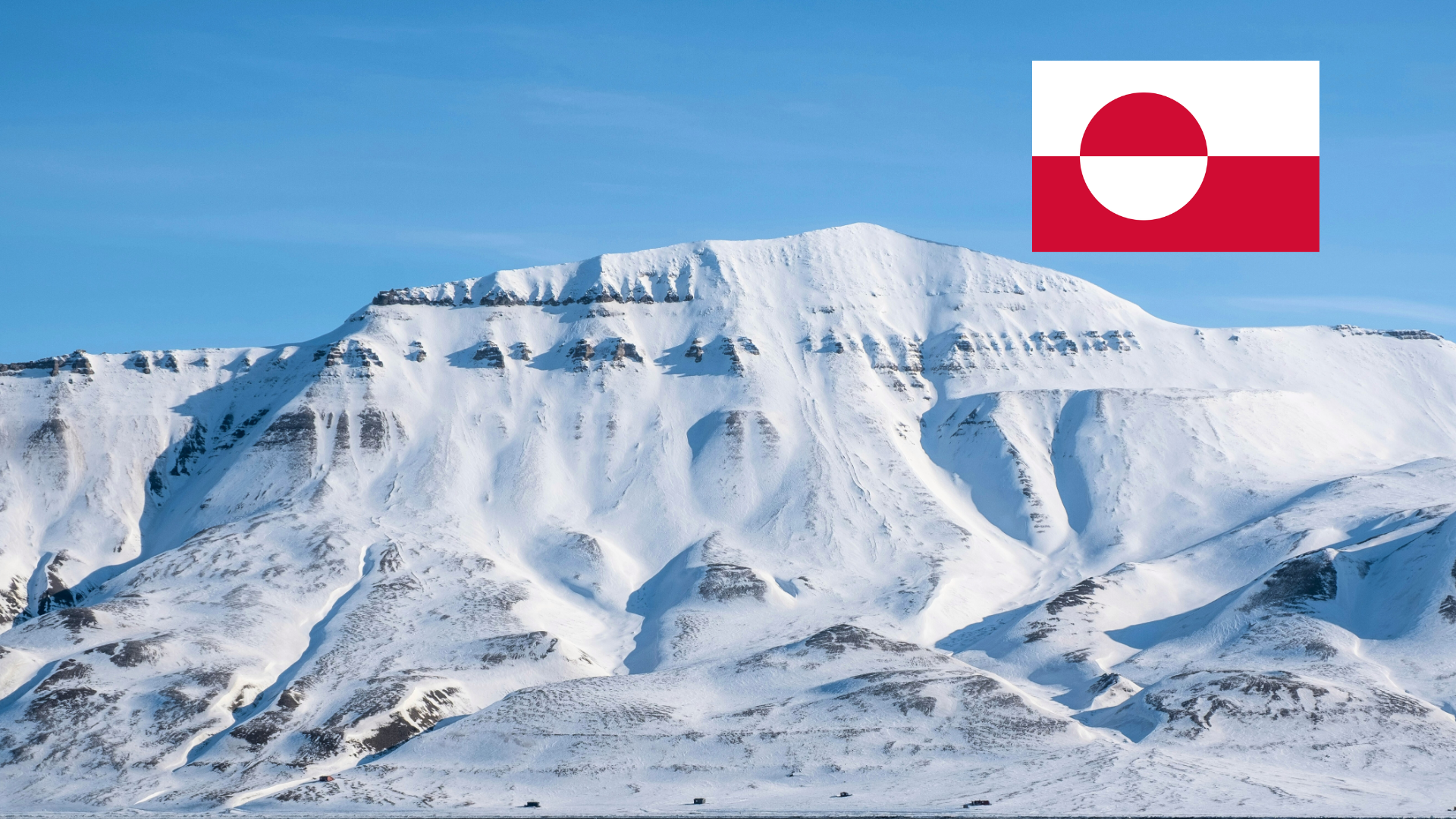
Greenland is currently the subject of increased international attention. This is primarily due to the island’s strategic location and its reserves of critical raw materials. At the same time, the economic structure remains clearly dominated by traditional sectors and close ties to Denmark.
Economic and trade ties with Europe
Although Greenland is not a member of the EU, it benefits from trade advantages through its OCT status. Between 2021 and 2027, €225 million in EU funds will be invested in sustainable development, education and green growth. This will be supplemented by Danish grants and EU programmes such as Global Gateway and the Arctic Strategy. The memorandum of understanding on critical raw materials signed in 2023 also positions Greenland as a potential raw materials partner for Europe.
Transforming infrastructure and investment frameworks
The geographical conditions place high demands on logistics and transport, as over 81 per cent of the island is covered by ice. However, with the expansion of Nuuk Airport in November 2024 and a Danish investment package of around 220 million euros, important foundations for better connectivity have been laid. Planned projects such as a deep-water port in Qaqortoq and an airport in Ittoqqortoormiit by 2029 are intended to further support economic development. At the same time, a new investment control system has been in place since 1 January 2026, which requires foreign investments in sensitive areas of 25 per cent or more to be approved, thus setting clear framework conditions for direct investment.
Trade: Dominance of fishing
Over 90 per cent of exports are fishery products, which were worth the equivalent of 679.7 million euros in 2024. Machinery and transport equipment played only a minor role, accounting for 10.2 million euros. Denmark is the most important trading partner, while Germany purchased fish and meat preparations worth 22.5 million euros in 2024.
On the import side, Greenland is dependent on machinery, transport technology and mineral oils, mainly from Denmark and Sweden. Although Germany is one of the six most important trading partners, trade volumes are low.
Raw materials and labour market
Despite known deposits of rare earths (over 36.1 million tonnes according to data from the Danish and Greenlandic government agency) and other critical raw materials such as gold, zinc, nickel, tungsten and copper, their economic use has been marginal to date. High extraction costs, difficult logistics and a lack of infrastructure currently prevent profitable exploitation. Raw materials are therefore strategically important, but not yet economically relevant.
The labour market is predominantly shaped by the public sector. A large proportion of employees work for local authorities or the Greenlandic government. Other important sectors include fishing, hunting, construction, wholesale and retail trade.
Source: GTAI (in German)