
The EU and India have successfully concluded negotiations on a free trade agreement. In addition, India is tightening its trade policy on machinery imports from China and Taiwan, thereby changing the competitive conditions in the plastics sector. This is creating new market opportunities for German machinery and plant manufacturers in a rapidly growing industrial environment.
Breakthrough in trade agreement
After years of negotiations that were interrupted several times, the EU and India reached an agreement on a free trade agreement at the end of January 2026. The key point is the extensive reduction of tariffs on almost all EU exports to India, including significant reductions on vehicles and the gradual abolition of duties on car parts, machinery, chemical and pharmaceutical products. Concessions are also planned for selected processed agricultural goods such as confectionery and alcoholic beverages. In addition, improvements in access to service markets have been agreed. However, before the agreement can take effect, it must be formally approved by the EU Council and ratified by the parliaments of both sides.
Growing plastics market drives demand
India is developing into a dynamic sales market for machine and plant manufacturers. The plastics industry in particular is gaining importance. According to the All India Plastic Manufacturers Association (AIPMA), the market value is expected to rise from 26.6 billion US dollars in 2025 to 40.5 billion US dollars by 2030. The India Brand Equity Foundation even forecasts a volume of 44.6 billion US dollars in 2030. These prospects are giving cause for optimism among the country’s approximately 30,000 plastics manufacturers, 85 to 90 per cent of which are micro, small and medium-sized enterprises.
Rising domestic demand for plastic products
Industry growth is driven primarily by growing domestic demand. Experts anticipate an average annual growth rate of approximately 14 per cent across all sub-sectors. Per capita consumption of plastic was estimated at 15 kilograms per year, but is likely to be higher now. In international comparison, there is still considerable potential, as consumption in China is 62 kilograms and in the USA 112 kilograms per person per year. The packaging sector is developing particularly dynamically, with growth rates of over 20 per cent per year, driven in part by the booming online trade.
Additional momentum is coming from other consumer industries. Demand for passenger cars rose significantly following a reduction in sales tax in September 2025. At the same time, new sales markets for plastic products are emerging, for example in the semiconductor industry and smartphone production. The construction industry also remains an important growth driver, supported by government infrastructure spending and rising residential construction as a result of urbanisation.
Dependence on imports of raw materials and machinery
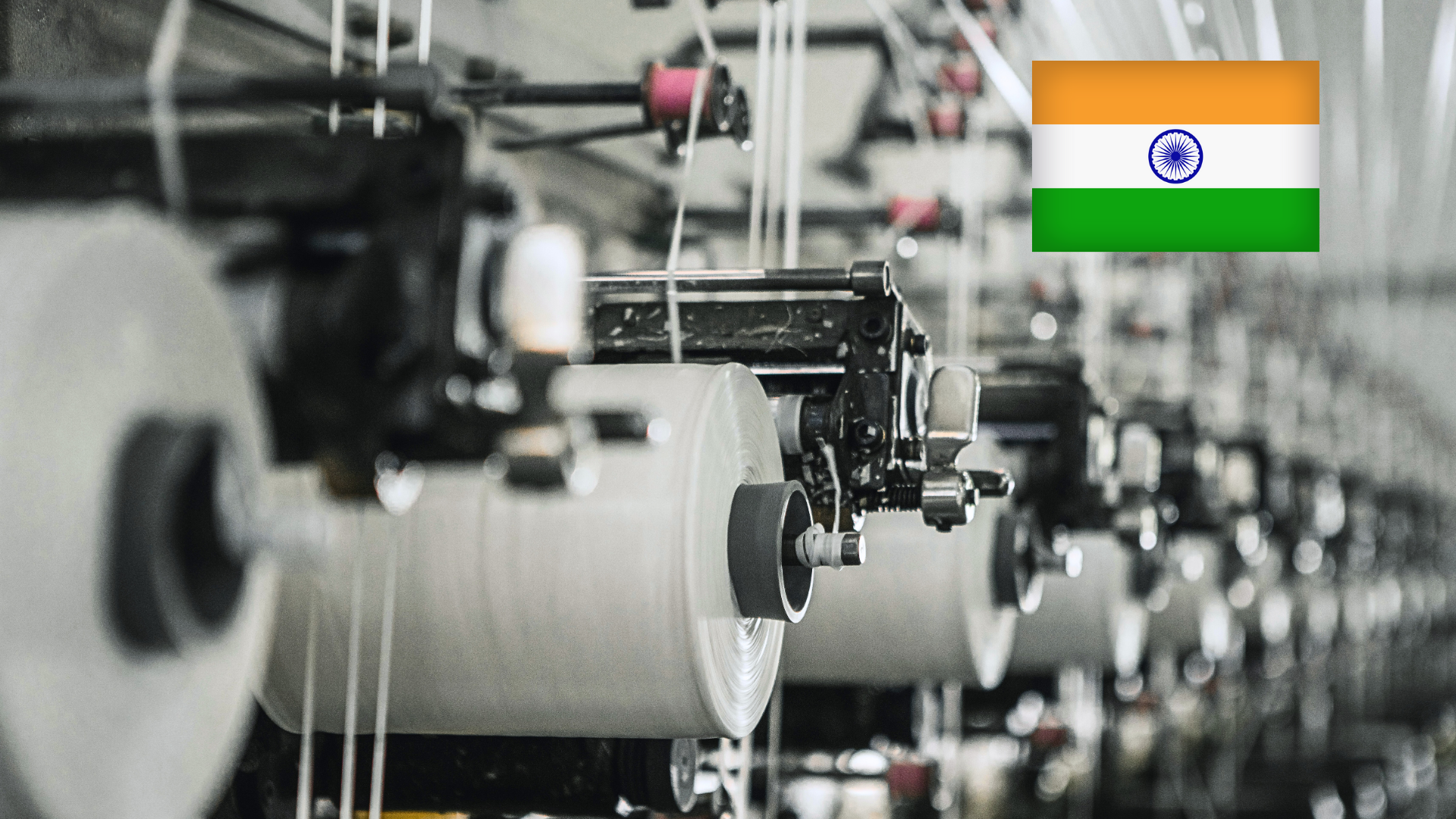
Despite the expansion of local production capacities, India remains dependent on imports for key intermediate products such as polypropylene. The situation is similar for plastics processing machinery, which has so far been sourced mainly from China. This means that Chinese suppliers are in direct competition with German exporters.
High anti-dumping duties alter the competitive situation
In order to protect domestic manufacturers from low-priced imports, the Indian government introduced anti-dumping duties on machinery for manufacturing rubber and plastic products and related parts in the summer of 2025. For goods from China, the duty rate is 63 per cent of the CIF value (value of the machinery + insurance + freight costs), and for imports from Taiwan, it is 53 per cent.
Until now, shorter delivery times and lower prices have been the main advantages of Chinese machinery. The new customs regulations are shifting the competitive landscape. German machine manufacturers are becoming more attractive in terms of price as the gap between them and Chinese offerings narrows.
Source: GTAI (in German)